 Spirit: now here is a word that is commonly used, and frequently with different connotations. So I ask you, just what is ‘spirit’ anyway. Likely you would say drive, animation, liveliness, etc. Then I might inquire about the Holy Spirit, and if you were Christian, your response would be a forthright; “it’s the third person of the Trinity”. Then I might inquire about what that ‘third person of the Trinity’ means. What meaningful information could you give me? I suspect you would be stumped for a meaningful answer. And why am I allowed to say that?
Very plainly the Trinity refers to the three persons in a God who is presumed to exist. Notice I said ‘presumed’—why didn’t I say “who is known to exist”? Lots of folks would retort that they ‘know’ it because they ‘believe’ it. But does believing make it so? I think not—folks have believe all sorts of thing that later were proven to be false. For instance, there was once a time when people were certain that the earth was flat, and in addition it was the center of the universe—Galileo Galilei discovered that the sun was the center of our little universe (solar system). His discovery almost cost him his life—The Inquisition was going to burn him at the stake until he retracted his scientific discovery. He spent the last nine years of his life under house arrest for his ‘foolish’ assertion. It was also falsely believed under penalty of death that the earth was supported on five crooked legs. Because of that false belief, sex anywhere except on the ground was punishable by burning at the stake—the vibrations created by sex on an elevated bed might cause the wobbly legs to collapse and the earth would topple into the netherworld below.
 So you might ask what’s my point. My point is rather simple—faith does not equilibrate with fact. A cursory examination of history will plainly show the massive turmoil our earth has endured because of faith. What ‘faith’ had done is generate thousands and thousands of religions, each with a competing idea about a god which it cannot define, but with a definitive method for appeasement. That’s what religion has done and is still doing—the turmoil continues at a torrid pace.
You might say; “man, where are you going with this?” And, I say; “if you cannot define the essence of your god, then you realistically have no god—you have a myth. Sounds pretty harsh, doesn’t it?—could anything be more harsh than the unending turmoil created and perpetuated by religion? I’d venture to say you’d be hard-pressed to identify it. Just in case you don’t understand, essence is that singular quality which makes something what it basically is.
So what does all that have to do with spirit (Holy Spirit) ?—everything. It is not possible to have a concrete understanding of the Holy Spirit without defining the essence of God. I am the only human who ever lived who has irrefutably defined the essence of God—check it out—sounds egotistical but true. I defined God’s essence thus: God is a perfect rational being. That means that God has a Perfect Intellect which perceives all and a Perfect Will which achieves all. When Gods Perfect Intellect reflects upon its perfect perceptions, it sees a perfect mirror image of itself. In the supernatural both images are live beings. Those two perfect images have no choice except to accept (will, choose, love) that Perfection. That loving, willing, choosing, accepting each other is the Will of God, the Holy Spirit. That spirit is the ‘driving’ force which enlivens and keeps perfect each particle of God’s creation (imagination).
 That takes right back to the everyday understanding of ‘spirit’—drive, animation, liveliness. The Holy Spirit (Will of God, Gods Love, God’s choosing, God’s acceptance) is the Perfect Driving Force who keeps all of creation perfect.
So how does that play into our understanding of spirituality. Many might and probably do equilibrate religiosity with spirituality—they presume that because they are religious, they are spiritual. And I can guarantee you that nothing could be farther from the truth. Spirituality entails the knowledge and understanding that the Holy Spirit (Will, Love, Choice, Acceptance of God) is indelibly branded onto every particle of energy of which all things are made. That brings Paul’s assertion that ‘we are temples of the Holy Spirit’ into clear focus.
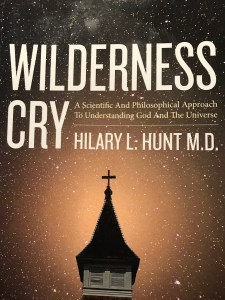
I have written extensively about this subject in my two books, Wilderness Cry, and Peace in Spirituality. Covenant books published both. I have attached their press release and video trailer for each. I would encourage you to read my little books to increase your scope of understanding, but more importantly, to relieve yourself of the terrible blanket of guilt imposed on you by religion. You are guilty of nothing but being a child of God who cherishes you with Perfect Love.
906242_Press Release for Wilderness Cry
Press Release for Peace in Spiritiality
 Do you know what a ‘thing-a-ma-jig’ is? Well, specifically speaking, neither do I. But I’d bet my last dollar that if you were to eavesdrop on a group of West Kentucky farmers sitting around a pot-bellied stove, you wouldn’t have to listen very long until you heard the term, thing-a-ma-jig. Each one, in turn, sooner or later is likely to utter the term during an attempt to explain a solution to some farm or machinery problem. However, not one of his listeners have the foggiest notion of what the other’s thing-a-ma-jig is, but true to the usual, each pretends to know exactly what he means.
 I believe it was the famous Greek philosopher, Socrates, who, being continually annoyed by such jargonistic speech, counselled his acolytes to “question everything”. The hoity-toity Greeks didn’t want to be ‘questioned’—so they killed him. What he meant was, ‘if one cannot define his/her terms, they likely are meaningless. Do not waste your time engaging in meaningless talk’.
 I mentioned that the essence of God has never been defined—that is until August of 2016 when I published the first of my two philosophy books, Wilderness Cry. After fifty to sixty years of intense study and pondering, and with the explicit help of Particle Physics (Quantum Mechanics), I came to the startling realization of what and who God is. God’s ‘absolute essence’ can be summed up in six simple words—God is a Perfect Rational Being. That essential definition says it all—absolutely nothing can be added nor deleted. God’s perfect intellect perceives all, and his perfect will (love) achieves and maintains all. That perfect Love precludes any possibility of a ‘hell’—simultaneously, Gods perfect nature precludes any possibility of ‘physical miracles’. A physical miracle would require a ‘change’ of God’s perfect nature—since Gods nature is perfect, change is impossible.
 So what conclusions can be drawn? Many, many, but the most important are these—hell is an impossibility; everyone is destined for eternal bliss; physical miracles, as such, are an impossibility (any miracle would demand God change his nature and since that is imposable, so are miracles).
 Just what is religion anyway? Religion may be defined as a set of cultist practices aimed at a mythical god either as appeasement for our offenses or for gaining favor over others (a higher place in heaven). You may scream and kick and call me a heretic and blasphemer, but then, all I ask you to do is to define the essence of your god—and I will show you post-haste that your god is a myth—you can’t define it—I did. Because of a lack of that essential definition, we have in the world 33,000 so-called Christian religions alone—to say nothing about all the sub-sects of the other Great religions of the world.——–Spirituality is impossible.
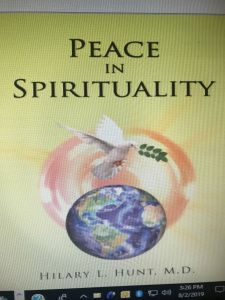 Perfect rationality demands an ‘intellect’ which knows all and a ‘will’ which achieves all. It not only allows for, but demands, the existence of Trinity God. More importantly, it demands that every particle of energy (quantum) be branded with the Holy Spirit (Will, Love, Acceptance) of God or it could not exist. That, my friends, is SPIRITUALITY—the understanding and acceptance that the spirit of God is in everything and that everything is in God. Three years ago, I called for the World-wide Communion of Spirituality—and what is that? It is the understanding and acceptance that we and every gravid object in God’s universe are bound in a common cloak of his Holy Spirit (Spirituality).
 Now, back to the ‘horror story’. From a sound and irrefutable, scientific and philosophical standpoint, physical miracles are an absolute impossibility. Therefore the following pertains: (1) Jesus was/is real: (2)he was born of natural parents: (3) of necessity, he was a super-genius to see and recognize the nature of God and his creation: (4) once he concluded that he must die so the Father could be/exhibit his perfect love, he wanted desperately to tell the world the good news (gospel). So he set about his public ministry, working on the periphery attempting to educate twelve illiterates—it seems very doubtful to me that he succeeded: (5) in spite of his working and preaching in relative obscurity, his heretical teachings reached the ears of the Jewish authorities—he knew his days were numbered:(6) he went straight to the source—he made an onslaught on the temple—he turned over the moneychangers tables and called the some pretty nasty names while doing it: He then ate his last meal with his apostles, and while eating, he made one final desperate attempt to pierce their thick, prejudiced skulls—he told the that he and the Father are one just as they and the Father are one—he told them that the bread and wine they consumed were one with the Father, as was all of creation—it seems that most if not all of the didn’t understand–we have no certain way of knowing. Much of what was written was written by biased, superstitious people. Furthermore those writings have been altered extensively by other biased and superstitious people. (7) I believe without doubt that the ‘Jesus” story is basically true—its parameters are false.
 Have you ever wondered why and how two of the oldest philosophies/religions in the world came to be? More importantly, have you ever considered the ultimate concepts contained in those philosophies ? While I do not know, with certainty, about their origin and development, it seems likely to me that they were a direct attempt to understand the basic meaning of life, and at the same time, discover the nature if its origin. While the Abrahamic religions were busy bargaining with their god, and offering sacrifices to him, the contemplative far-easterners were desperately trying to understand if such an entity actually existed, and, if so, in what environs.
 My research tells me that the contemplatives were way ahead of the sacrificials who had dreamed up a scheme of power and control right out of their own playbook—that is to say, they manufactured a god patterned directly after their own possessive, egotistical selves. Their god was theirs alone and could not be shared with anyone.
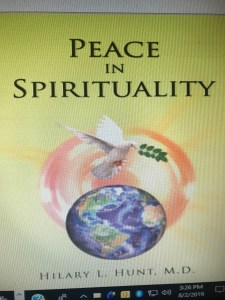 Can there be a greater thrill? I’d vouch to say that no one, who professes an Abrahamic religion, is any closer to God than any Hindu or Buddhist who ever lived. We, each, are loved equally by our Perfect Loving Creator, with no one possibly being more favored over another—there are no such things as higher places in heaven.
 COMMUNION: in its usual sense this word means ‘a coming or being together’ in either body or spirit or both. It is generally used in a religious or spiritual sense–for instance we frequently hear of ‘the communion of saints’–more often we are presented with the sacrament of Eucharist which is commonly referred to as ‘Holy Communion”. The latter terms typically are used by the ‘sacrificial’ Christians–Catholics, Episcopals, Lutherans, etc.
 CONTRADICTION: the word itself mean a saying or statement that seems contrary to the reality or truth of another statement. Contradictions are a ‘dime a dozen’ in our everyday lives—may are readily resolved and many go totally unresolved. I want to address what seems to me do be a direct contradiction between Christian prayer and a direct quote from Luke’s Gospel.
 WILDERNESS CRY by Hilary L Hunt MD