 PRAYER-Do you pray, and if so, why? To whom do you pray and what do you expect from your prayers. I was taught that there are basically three kinds of prayer, contrition, petition , and thanksgiving.
In prayers of contrition we acknowledge to God and the Saints in heaven that we are sinners, express regret and sorrow for our sins and vow to sin no more. Of course, as a practical matter, we break that vow almost before it gets out of our mouths. Most people know the Ten Commandments but, likely as not, the only ones of consequence in their minds are number six and number nine. Not many people kill someone in cold blood—neither do many rob a bank. I would suggest to you from my observation of peoples behavior that the most frequently violated commandment is number eight—number ten runs a close second. However, it is quite obvious to me that most people consider it to be their right and privilege to be both critical and envious of their neighbor without the slightest thought of it being ‘sinful’. And what about that ‘honor your father and mother’ deal—disrespect of parents has become so openly blatant as to be scandalous.
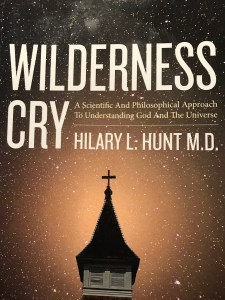
Now here’s my favorite—prayers of petition. I have pondered endlessly what people expect when they beg God to change his mind. Again, it seems quite obvious to me that they have no realistic notion of what they are asking. Basically what those prayers are doing is asking God to momentarily ‘dash out of eternity’ into our ‘time world of change’, make a rearrangement (miracle) just for them and then immediately dash back into eternity. In my book Wilderness Cry, I define the essence of God— God is a perfect rational being. That definition in itself excludes any possibility of God being able to ‘change’ anything. God’s Perfection means no change is possible. God’s existence in eternity, a state of being without change, precludes any possibility of God being able to change anything. Time is a measure of change—there is no time in eternity. I believe that all of that thought process stems from the ‘creation theory’ of the universe—God made it, so he can change it any old time he wants. Well, in the days of scientific void, that dog hunted well. However, with our scientific understanding of God’s ‘real creation’ that old dog just won’t hunt any more. We now know that God made only one creation, the tiny little particles of energy (quanta) of which everything is made. Each of them is perfect and unchangeable—each exists in eternity with God (is God). Therefore no change is possible—physical miracles are a scientific and philosophic impossibility.
 Now here’s my favorite—prayers of thanksgiving. Admittedly, we have so much to be thankful for—our life, our sustenance and our salvation through Jesus. So, its understandable that we may feel moved to give God his just due with a hearty ‘thank you’. The question is, do you believe God is perfect? If you don’t, you’re admitting to the possibility of a ‘superior god’ to yours. If you do, and who can legitimately deny it, you’re admitting to God’s Perfect love. So just what is ‘perfect love’? It is acceptance without conditions—God accepts (loves) us regardless of what we do—God knows WHY WE BE. He allowed us to ‘BE’ and why? So he could show us his perfect love through the death of his and our mirror image, Jesus. So, should we be thankful?— absolutely. Does God care?—not in the least. His caring would demonstrate a weakness in his character—certainly not perfection.
So, what’s all the praying about? I’ll submit to you that prayers of contrition are chastening and potentially beneficial for making us better people toward God and neighbor (‘You shall love your God with your all and you shall love your neighbor as yourself. [paraphrased] ).
I accept the scientific and philosophic principle that prayers of petition are worthless. Asking God to do something he cannot possibly do borders on blasphemy. In addition, they, unwittingly, demonstrate our extreme degree of self-centered selfishness. Just for one moment consider the ultimate consequences of such prayers—if God ‘answered’ everyone’s such prayers, there would be no suffering or death, no inconvenience of any kind—we would be in a New Paradise where snakes talked; bears, lions, and alligators rubbed noses with loving kisses and all is well—a veritable fantasy world. Have you taken note of how often we pray for the miraculous cure of a dreaded disease, but in spite of all the prayers, our loved one dies—does that mean God doesn’t love us, or maybe we didn’t ‘pray hard enough—do you accept that responsibility—do you feel guilty ? On the other hand, how often do we see people successfully undergo the simplest of medical procedures or get well from a common cold, and declare it a miracle because they prayed—I wonder what they really mean or just what understanding they really have.
Now we come to prayers of thanksgiving. While I believe that God expects nothing from us, prayers of thanksgiving are humbling and remind us of our eternal dependence on God—that’s a good thing.
 One must ask where all these ideas about prayer come from in the first place. I can assure you they came directly from the imaginary minds of mythology. I have belabored this point ad nauseum, but all religion stemmed from the imaginary idea that God was/is a punitive God and must be appeased. All religion is irrational because it has as its basis an imaginary, mythical god. My God is real—I have defined it—can you define the essence of your god?
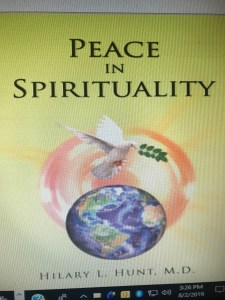
My two little books , Wilderness Cry and Peace in Spirituality spell it out completely. I am attaching Covenant Books Press Releases and Video trailers. If you truly want to ‘wrap your arms’ around what you should believe (accept) and why, please read my books.
Again my call for recognition and acceptance of The World-wide Communion of Spirituality.
906242_Press Release for Wilderness Cry
Press Release for Peace in Spiritiality
 SOCIALISM: how often in the history of the USA have we heard that term—in fact we are hearing and seeing it openly advocated by political candidates on a moment to moment basis. Essentially all of the ‘isms’ carry then same base brand—taking from the ‘haves’ and giving to the ‘have nots’. This is a political ploy as old as the hills. It appeals to many for two basic reasons. Number one, many ‘less fortunate’ folks are eager to get free stuff. Number two, many of those same people are envious of their more fortunate neighbors and selfishly desire to see them reduced to financial ruin—the foolish idea that it betters one’s situation to see his neighbor fail–envy at it’s best.
 As suspected, yesterdays post about the history of baptism, created quite a stir about the origin of baptism and its meaning. There are certain groups of Christians who cannot allow themselves that luxury of historical perspective. However, the pagan origin of Baptism is undeniable. The ‘rub’ came when the Catholic Church declared Baptism a Sacrament, and an essential for admission into heaven. That instantly created another loophole which had to be closed—that being state of limbo for the un-baptized.
 So it is evident, the responsibility for Christian baptism lay clearly at the feet of Jesus. However Jesus said, ‘John gave you baptism with water, but I will Baptize you with the Holy Spirit’. Obviously a paradox exist here. Why did God’s voice speak from the heavens and say , ‘This is my beloved Son in whom I am well pleased . Listen to him’. Who was there to listen and hear? Jesus had not yet chosen his apostles. So who heard that it might be recorded later? I suspect no one. I believe it was absolutely a ‘trumped up’ idea inserted into Bible centuries later to satisfy the figment of someone’s imagination. If the Jews had heard it, they would have been compelled to, obey—direct orders from God?—who would dare ignore?
 If we are ever to have peace on this earth, each of us must come out of our ‘badger like’ cocoons, humbly accept that the Spirit of God is in us all, and indeed in all of creation. Not one of us is worthy of God’s Kingdom—it is by his singular acceptance that he has made us, and every grain of sand in the universe worthy. With that understanding, we could finally have peace—not until.
 I am convinced that Jesus was the most brilliant human to ever live. In spite of being illiterate, He recognized many important clues about God. He saw that everything in this universe was evil by virtue of its selfishness. Without any scientific knowledge at all, to say nothing of ‘particle physics’, Jesus reasoned that the spirit of God was in everything. Yet everything was made perfect, and maintained perfect by a Perfect God.

 Many people very likely think of poverty as a permanent state, and possibly for some that is the case. Poverty comes in many colors and degrees. Frequently poverty is a state of mind—that is we may tend to think of ourselves in a deprecatory way and therefore feel impoverished when in fact we are not. Poverty may in fact be defined as a state of existence whereby the minimum basic needs are deficient or at least marginal. Again, poverty may be temporary or permanent. Permanent poverty may be unavoidable (permanent disability, etc.). On the other hand, some permanent poverty may be and frequently is a “state of mind”—we simply enjoy being poor and marginalized. Temporary poverty is common to millions—we have minimal resources now , but are determined to better ourselves. Consequently we work extremely hard, suffer all sorts of indignities and efficiencies, but we keep our “nose to the grind stone”. and our vision straight forward to a better life—with a little help, we succeed.
 Observing all this perpetual hostility and confusion compelled me to define the essence of God once and for all. I did so with six, simple, irrefutable words. God Is A Perfect Rational Being. This simple, singular, essential definition explains all with no room for confusion nor discord. This definition demands that every rational being recognize and accept the basic concept that the image of God, the Holy Spirit, is imprinted on every single entity that ever existed; otherwise nothing could exist. That singular concept “demands” that each of us accept, unreservedly, the fact that we and all existences are united under one Singular Common Spirituality. As such, there is no quarter for any discord.
 In any event, there was obvious mass confusion, but true to form, a new ‘religion’ emerged—Judeo-Christian. While Jesus is reported by Paul to despise religion, ultimately the sacrificial Christian Jews won out. However, there was absolutely no unanimity of belief or religious practice until some 300 years after Jesus death when Constantine convened the first Council at Nicaea and mandated a singular practice enforced by the Roman army.
 WILDERNESS CRY by Hilary L Hunt MD