 PRAYER-Do you pray, and if so, why? To whom do you pray and what do you expect from your prayers. I was taught that there are basically three kinds of prayer, contrition, petition , and thanksgiving.
In prayers of contrition we acknowledge to God and the Saints in heaven that we are sinners, express regret and sorrow for our sins and vow to sin no more. Of course, as a practical matter, we break that vow almost before it gets out of our mouths. Most people know the Ten Commandments but, likely as not, the only ones of consequence in their minds are number six and number nine. Not many people kill someone in cold blood—neither do many rob a bank. I would suggest to you from my observation of peoples behavior that the most frequently violated commandment is number eight—number ten runs a close second. However, it is quite obvious to me that most people consider it to be their right and privilege to be both critical and envious of their neighbor without the slightest thought of it being ‘sinful’. And what about that ‘honor your father and mother’ deal—disrespect of parents has become so openly blatant as to be scandalous.
Now here’s my favorite—prayers of petition. I have pondered endlessly what people expect when they beg God to change his mind. Again, it seems quite obvious to me that they have no realistic notion of what they are asking. Basically what those prayers are doing is asking God to momentarily ‘dash out of eternity’ into our ‘time world of change’, make a rearrangement (miracle) just for them and then immediately dash back into eternity. In my book Wilderness Cry, I define the essence of God— God is a perfect rational being. That definition in itself excludes any possibility of God being able to ‘change’ anything. God’s Perfection means no change is possible. God’s existence in eternity, a state of being without change, precludes any possibility of God being able to change anything. Time is a measure of change—there is no time in eternity. I believe that all of that thought process stems from the ‘creation theory’ of the universe—God made it, so he can change it any old time he wants. Well, in the days of scientific void, that dog hunted well. However, with our scientific understanding of God’s ‘real creation’ that old dog just won’t hunt any more. We now know that God made only one creation, the tiny little particles of energy (quanta) of which everything is made. Each of them is perfect and unchangeable—each exists in eternity with God (is God). Therefore no change is possible—physical miracles are a scientific and philosophic impossibility.
 Now here’s my favorite—prayers of thanksgiving. Admittedly, we have so much to be thankful for—our life, our sustenance and our salvation through Jesus. So, its understandable that we may feel moved to give God his just due with a hearty ‘thank you’. The question is, do you believe God is perfect? If you don’t, you’re admitting to the possibility of a ‘superior god’ to yours. If you do, and who can legitimately deny it, you’re admitting to God’s Perfect love. So just what is ‘perfect love’? It is acceptance without conditions—God accepts (loves) us regardless of what we do—God knows WHY WE BE. He allowed us to ‘BE’ and why? So he could show us his perfect love through the death of his and our mirror image, Jesus. So, should we be thankful?— absolutely. Does God care?—not in the least. His caring would demonstrate a weakness in his character—certainly not perfection.
So, what’s all the praying about? I’ll submit to you that prayers of contrition are chastening and potentially beneficial for making us better people toward God and neighbor (‘You shall love your God with your all and you shall love your neighbor as yourself. [paraphrased] ).
I accept the scientific and philosophic principle that prayers of petition are worthless. Asking God to do something he cannot possibly do borders on blasphemy. In addition, they, unwittingly, demonstrate our extreme degree of self-centered selfishness. Just for one moment consider the ultimate consequences of such prayers—if God ‘answered’ everyone’s such prayers, there would be no suffering or death, no inconvenience of any kind—we would be in a New Paradise where snakes talked; bears, lions, and alligators rubbed noses with loving kisses and all is well—a veritable fantasy world. Have you taken note of how often we pray for the miraculous cure of a dreaded disease, but in spite of all the prayers, our loved one dies—does that mean God doesn’t love us, or maybe we didn’t ‘pray hard enough—do you accept that responsibility—do you feel guilty ? On the other hand, how often do we see people successfully undergo the simplest of medical procedures or get well from a common cold, and declare it a miracle because they prayed—I wonder what they really mean or just what understanding they really have.
Now we come to prayers of thanksgiving. While I believe that God expects nothing from us, prayers of thanksgiving are humbling and remind us of our eternal dependence on God—that’s a good thing.
 One must ask where all these ideas about prayer come from in the first place. I can assure you they came directly from the imaginary minds of mythology. I have belabored this point ad nauseum, but all religion stemmed from the imaginary idea that God was/is a punitive God and must be appeased. All religion is irrational because it has as its basis an imaginary, mythical god. My God is real—I have defined it—can you define the essence of your god?
My two little books , Wilderness Cry and Peace in Spirituality spell it out completely. I am attaching Covenant Books Press Releases and Video trailers. If you truly want to ‘wrap your arms’ around what you should believe (accept) and why, please read my books.
Again my call for recognition and acceptance of The World-wide Communion of Spirituality.
906242_Press Release for Wilderness Cry
Press Release for Peace in Spiritiality
 Are you a child of God , and if so, how does that work for you? I’m 86 years old and I suspect that during those 86 years, I’ve heard that expression at least fifty thousand times. If you profess to be a Christian, the likelihood is that you’ve heard it many, many times also. Every priest, deacon, preacher, Sunday school teacher and religion instructor of any kind has thrown that statement at us on a continual basis. Like so many things we hear in the religion sphere, we are lectured to and ask to believe assertions with implicit faith, but with no suitable explanation as a basis for our faith—we call that blind faith.
 All my books are now available from Amazon-Kindle, both hard copy and digital. Also available, autographed, from me (handg@comcast.net)
 SACRIFICE- now here’s a word that imparts a feeling of dread and drudgery, and well it should. How many times in our daily lives we are called to sacrifice our time, energy, talents and money for others. Most often it is for our family members, but frequently it may be for neighbors, friends or even total strangers. The question is ‘why do we do that?’. One might answer in various ways—sense of duty, sympathy, empathy (do unto others….). Regardless of the exact reason or attitude, sacrifice is always done because of one basic value and that is love.
 So what’s my point—don’t allow yourself to get caught in the trap of judgmentalism. Just because a person may seem to you to be insensitive, it may not be the case at all. Just because you as a specific individual may think of yourself as being extremely self-sacrificing, never allow yourself to be critical of other’s seeming disregard. Remember, all of your sacrificial activity carries with it a trail of selfishness—you get sense of self-satisfaction. Be careful not to let yourself be perceived as a do-gooder or, worse yet, holier than thou.
 My take is simply that ‘its all wrong’. My God is Perfect Rationality. He/she/it exists in eternity. Eternity is a state if being where there can be no change (time). God, being perfect, cannot possibly be pleased or hurt—allowing such would expose an imperfection. Jesus was the ‘only’ sacrifice of consequence. Jesus was genius—he saw the universal evil of selfishness—he recognized that the Spirit of God was in everything including him—he saw that in order for God to show his ‘perfect love’ to the world, he, Jesus must die in atonement for all the evil in the universe. He did so graciously but not without great fear and anguish—I can’t imagine such. God is heaven. We and everything in existence are in God and of God.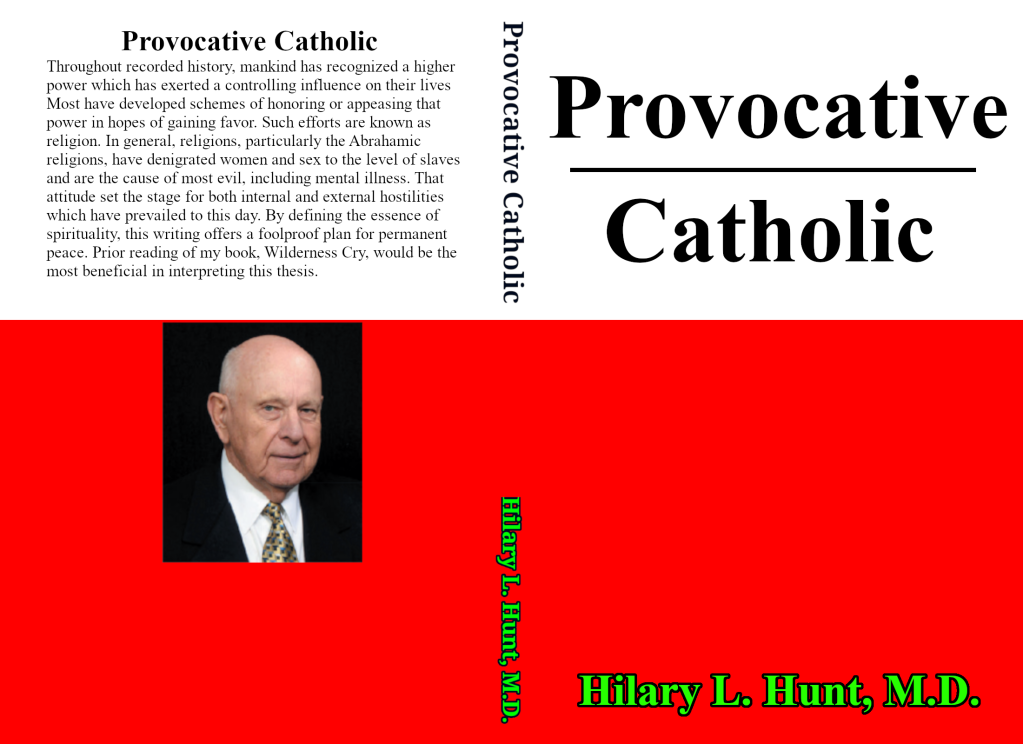


 Jesus, seeing the universal evil of selfishness which God instilled into every entity in existence, the only sin, and knowing that he and everything in existence were mirror images of God, knew that he must die so that God could be recognized as who he is, Perfect Love. He was the only human to ever see that—what a terrifying thought—he was the messiah—he was the sacrificial lamb who willingly paid the price so we all could have that clear understanding —what glorious beauty. As it evolved over time, it is obvious that Jesus was a total failure. His name has been used in total contrast to his desires and efforts, only to suit the whims of those who would continue dare control us with threats of God’s wrath for their own personal gain — the High Priest and King still live among us.. Our only just and worthy response is a great big thank you ,Jesus and thank you Perfect God for giving us the most heroic person to ever live who willingly and graciously died in our behalf.
  VENGEANCE-Now here is a word (concept) that is near and dear to my heart in a negative way. My basic concept and belief is that vengeance has absolutely no place in our lives. So why am I so different from the rest of the world? Literally all so-called civilized nations as well as the three Abrahamic religions have vengeance as their common seat of operation. All legal systems are based on a revengeful punishment system for misbehavior. How many times have we witnessed a wronged family express glee when a sentence of major proportion is handed down, or express disappointment and disdain if a sentence lighter than expected is rendered? Why do you suppose that is? I think without doubt it stems from the Jewish religion and perpetuated by Christianity and Islam.
 As I listen to homilies Sunday after Sunday, I hear of God’s mercy, never God’s love. Since we are all dreadful sinners, God has two choices—either show mercy and forgive us or send us to hell. Of course that mercy is ‘dished out’ by the Church—in exchange for our money and time. Never mind that we are sinners because God made us to be that way. Never mind that Jesus died to guarantee everyone’s salvation. Never mind that Jesus told us our only obligation was to love God and neighbor—after all, what Jesus said and did (died for us) really doesn’t count—it was just a ‘down-payment’. We must pay the balance to the Church.
 The obvious question then is why do we each have a different God? The answer is very simple—no one has ever defined the essence of that God, and certainly without an essential definition, no one has a realistic clue about who or what that God entails.
 WILDERNESS CRY by Hilary L Hunt MD