
SIN-Just what is sin and where did the idea of sin come from? Well, in the first instance, the Book Of Genesis tells us that Eve disobeyed God’s command and ate of the ‘forbidden fruit’ and enticed her husband, Adam to eat also. Consequently, every human and animal alike have been branded with the curse of that Original Sin. In the second instance, during the Israelites exodus from Egypt, they became unruly and pagan-like. Their leader, Moses, decided on a plan of action to get them under control—he concocted the Ten Commandments. When presented with them, the Israelites scorned Moses and went their ‘merry way’. Moses then presented them with a new set and proclaimed them to be God’s rules—any breech was known as sin against God which incurred his wrath from that day forward.
Now lets address the Garden of Eden story. It would seem from the story that before Adam’s and Eves’ sin all animals were peaceful and loved each other—they lived in perfect harmony. They all could surely talk because snakes could. What I want to know is who put the snake up to tempting Eve? If the snake dreamed up the idea herself, then she would have been the first sinner—I say ‘she’ because females have always been branded as being the source of all evil. Also, presumably, since all animals could talk, why didn’t many others attempt to talk the snake out of deceiving Eve? Secondly, likewise, at the moment Eve bit-in, all the animals would have turned ferocious. How could Adam and Eve have possibly escaped the ravages of all the Lions, tigers, grizzly bears, T Rexes, crocodiles, etc.—they were busy making loin-cloths from fig leaves—no way they could have survived. That entire story sounds very, very ‘fishy’ to me—it in no way reflects the God and the universe I know. I believe, without any doubt, that it represents the imagination of some person(s) attempt to explain a human condition from a platform of total ignorance. Never-the-less, that story persists today. Everyone is free to take it or leave it—I prefer the latter.
 Now lets talk about Moses and the Ten Commandments. He is to be commended for constructing such a good set of rules for civility in society. The only two of those rules which seemed to matter as time went on were the 6th and 9th. Of course, they were of paramount importance because a woman (wife) was a man’s property—any unfaithfulness on her part was punishable by stoning to death—pretty serious stuff.
All of this ideology about sin was developed under the pretext of ‘displeasing’ God—that’s what sin was/is. If God were displeased which he was perpetually, then some form of recompense had to be developed to appease God. So, the idea of sacrifice was developed, deployed and maintained even to this moment—God must be appeased at all cost. And ‘cost’ it did. The High Priest got filthy rich and the peasants got poorer.
Then Jesus came along and guess what—he saw two major problems with the entire set-up. Number one, he saw the minuscule, restrictive idea that the Jews had about the nature of their God. He understood the self-serving nature of their philosophy. Number two, he recognized the fallacy of their understanding of their relationship with their God. In other words they had no realistic idea who God was: neither did they have any realistic idea about love—one of the most basic attributes of Gods nature—his perfect love.
With that understanding, he set about attempting to instruct them. His intent was not to appease God who is Perfect but to liberate his brethren from the irrational, oppressive, sacrificial, thieving religion of the Jews under which they served. He tried desperately to get them to see that God is in everything and that everything is in God. Likely we shall never know whether or not he was successful. The surviving written word we have has been so distorted. Just look at all the dozens of times it has been rewritten, reinterpreted, and re-invented. So where do we go. I know where I went—I pursued a determined path to the truth.
As I investigated and studied, it became readily apparent that the essence of no deity had ever defined explicitly. It also became readily apparent that without that essential definition , any talk about a deity was just random jargon and totally meaningless. Accordingly, my determination allowed me the freedom of thought and understanding to make that definition—God Is A Perfect Rational Being. That perfection means it cannot possibly be pleased or displeased. God knows all and is all — God is Perfect Love.
 Jesus, seeing the universal evil of selfishness which God instilled into every entity in existence, the only sin, and knowing that he and everything in existence were mirror images of God, knew that he must die so that God could be recognized as who he is, Perfect Love. He was the only human to ever see that—what a terrifying thought—he was the messiah—he was the sacrificial lamb who willingly paid the price so we all could have that clear understanding —what glorious beauty. As it evolved over time, it is obvious that Jesus was a total failure. His name has been used in total contrast to his desires and efforts, only to suit the whims of those who would continue dare control us with threats of God’s wrath for their own personal gain — the High Priest and King still live among us.. Our only just and worthy response is a great big thank you ,Jesus and thank you Perfect God for giving us the most heroic person to ever live who willingly and graciously died in our behalf.
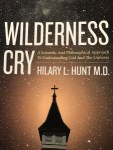
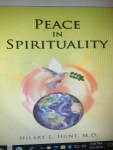
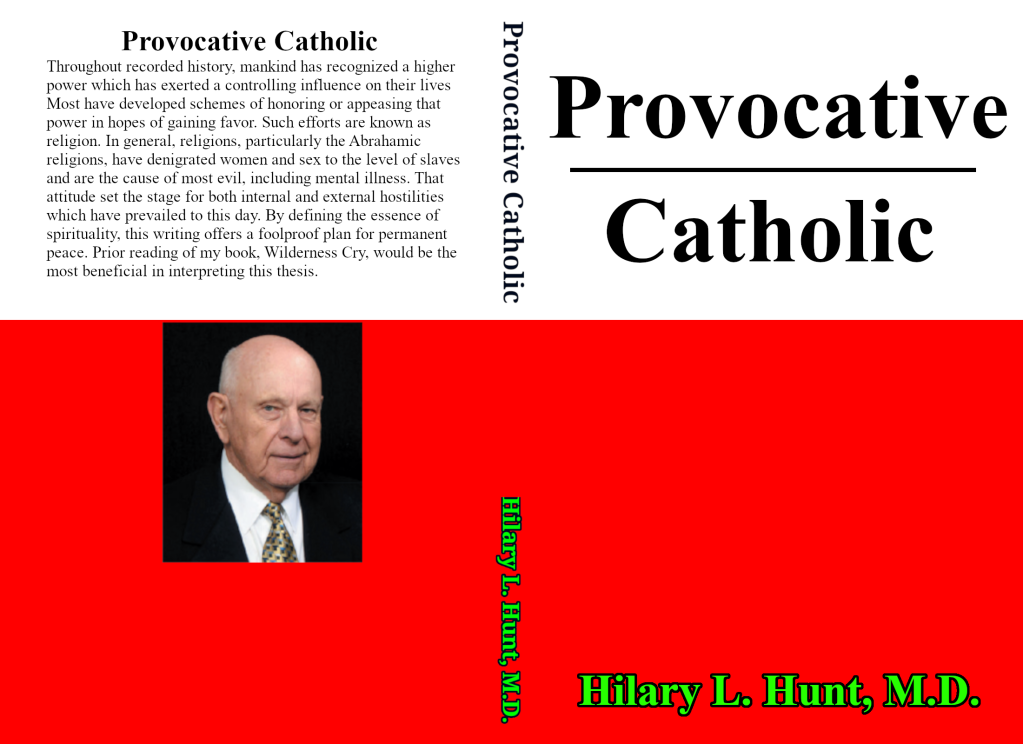
I have full explanation of that and much, much more in my three little books Wilderness Cry, Peace in Spirituality, and Provocative Catholic. All are available both Paperback and digital Amazon-Kindle and from me autographed (handg@comcast.net)—Press Releases and video trailers attached from Covenant Books.
906242_Press Release for Wilderness Cry
Press Release for Peace in Spiritiality
baptism Bible Buddhaism catholic catholic-church catholicism Christianity church Eternity exodus Faith Future of Christianity God God's Will gods Hilary L Hunt MD Hinduism HolyGhost Holy Spirit homily Islam Islam Christianity Jesus Judaism Judaism Buddhism Money moses Philosophy pope-francis Power Religion religions saints salvation Science sin theology The Trinity

 WILDERNESS CRY by Hilary L Hunt MD